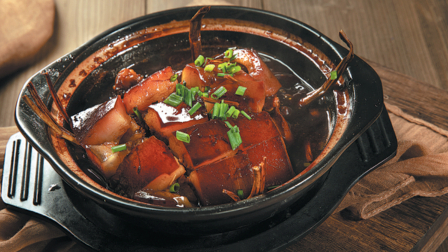
Dongpo Pork
Introduction
"Dongpo Pork", also known as Dongpo Rou, is a renowned Chinese dish that originated from the Zhejiang cuisine, particularly associated with Hangzhou. This dish is a type of red-braised pork belly, celebrated for its rich flavor, tender texture, and aromatic appeal. Named after the famous Song Dynasty (960-1279) scholar and statesman Su Dongpo (1037-1101), it stands as a symbol of Zhonghua culinary tradition and cultural heritage.
Historical Background
The origin of Dongpo Pork is tied to Su Dongpo, who was an accomplished poet, calligrapher, and gastronome. During his tenure as an official in Hangzhou, Su Dongpo initiated significant public works, including the dredging of the West Lake, which greatly benefited the local community. In gratitude, the people of Hangzhou presented him with large quantities of pork. Su Dongpo, known for his culinary creativity, modified the traditional method of braising pork by adding yellow wine and stewing it over low heat for an extended period. He then shared the resulting dish with the laborers, leading to its widespread popularity and the eventual naming of the dish in his honor.
Recipe and Preparation
Dongpo Pork is renowned for its meticulous preparation and the quality of its ingredients. The primary component, pork belly, is chosen for its balance of fat and lean meat, ensuring a melt-in-the-mouth experience. The traditional recipe involves the following steps:
-
Selection of Ingredients: High-quality pork belly, preferably with a uniform distribution of fat and meat layers, is selected. The dish also requires Shaoxing wine (a type of yellow wine), soy sauce, sugar, ginger, and green onions.
-
Initial Blanching: The pork belly is first blanched in boiling water to remove impurities and excess fat, which helps in achieving a cleaner taste.
-
Braising Process: The pork is cut into cubes and braised in a mixture of Shaoxing wine, soy sauce, sugar, and ginger. A slow and gentle cooking process is essential to allow the flavors to infuse deeply into the meat while maintaining its structure.
-
Final Stewing: The dish is slow-cooked over low heat. This step is crucial, as it allows the pork to become tender while the sauce thickens and caramelizes, imparting a glossy finish to the meat.
-
Serving: Dongpo Pork is traditionally served with steamed rice or buns, allowing diners to savor the rich sauce and tender pork together.
Cultural Significance
Beyond its culinary appeal, Dongpo Pork holds a significant place in Chinese cultural history. Su Dongpo himself is remembered not only for his contributions to literature and governance but also for his influence on Chinese gastronomy. The dish reflects his innovative spirit and appreciation for good food, and it has become a staple in Chinese cuisine, symbolizing the harmonious blend of taste and tradition.
Dongpo Pork is also celebrated in various cultural festivals and culinary events, both within China and internationally. It is often featured in Chinese banquets and is a popular choice in Zhejiang restaurants, where it is presented as a signature dish that showcases the region's rich culinary heritage.
Variations and Modern Interpretations
While the classic Dongpo Pork remains a favorite, chefs and culinary enthusiasts have introduced variations to cater to contemporary tastes and dietary preferences. Some modern recipes incorporate additional spices or modify the braising liquid to include ingredients like star anise or cinnamon, enhancing the complexity of the dish. Additionally, Dongpo Pork has inspired fusion dishes and creative presentations in upscale restaurants, where chefs experiment with textures and pairings to offer a novel dining experience.








